Plates Crafted Annually
Village Artisans Supported
States We Export To
Plastic-Free Products
Nature's Finest Tableware
Every item is sourced from Indian forests, pressed and stitched by hand — no glue, no chemicals, no compromise.
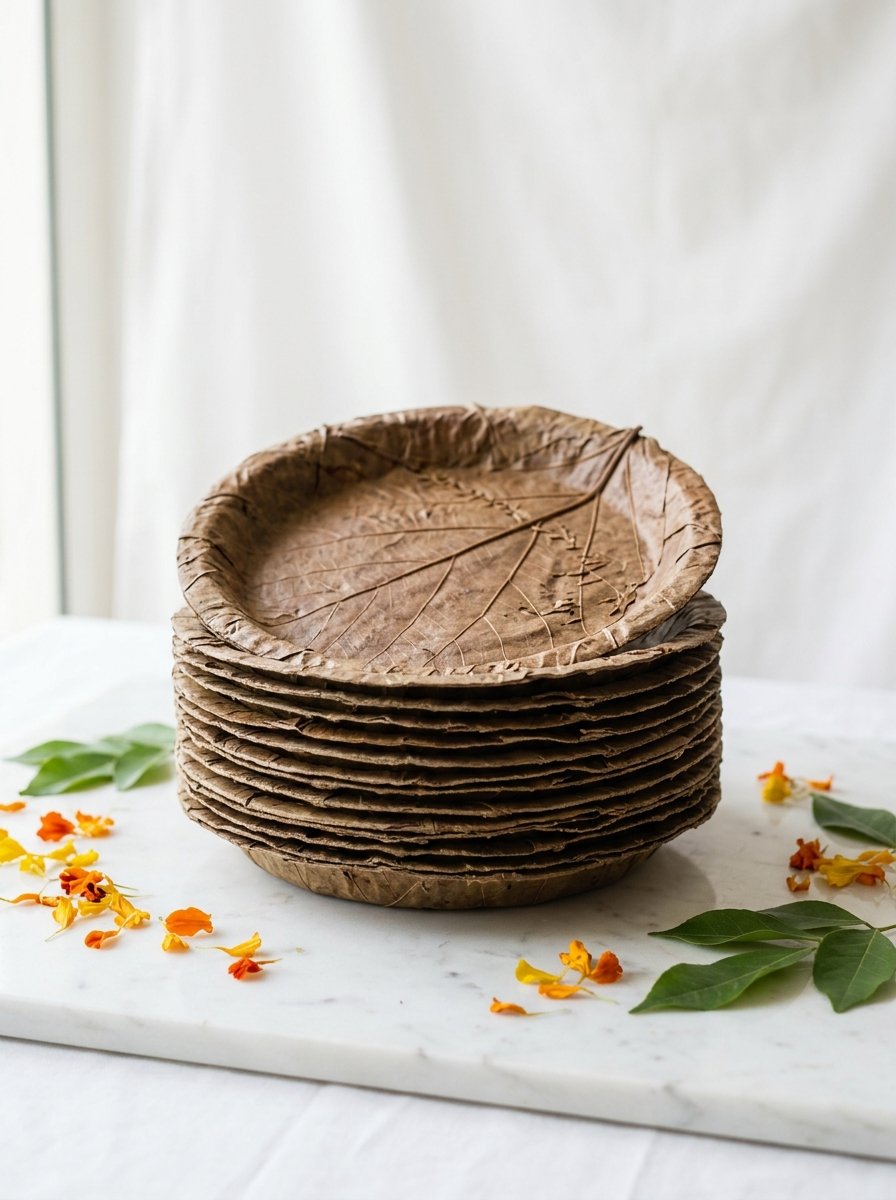
Sal Leaf Dinner Plates
Traditional round pattal plates hand-stitched from dried sal leaves. Ideal for meals, prasad, and catering events.
- 🌿 100% Natural & Biodegradable
- 🔥 Microwave & oven safe (up to 20 min)
- 💧 Naturally water-resistant
- 📦 Available: 6", 8", 10", 12"
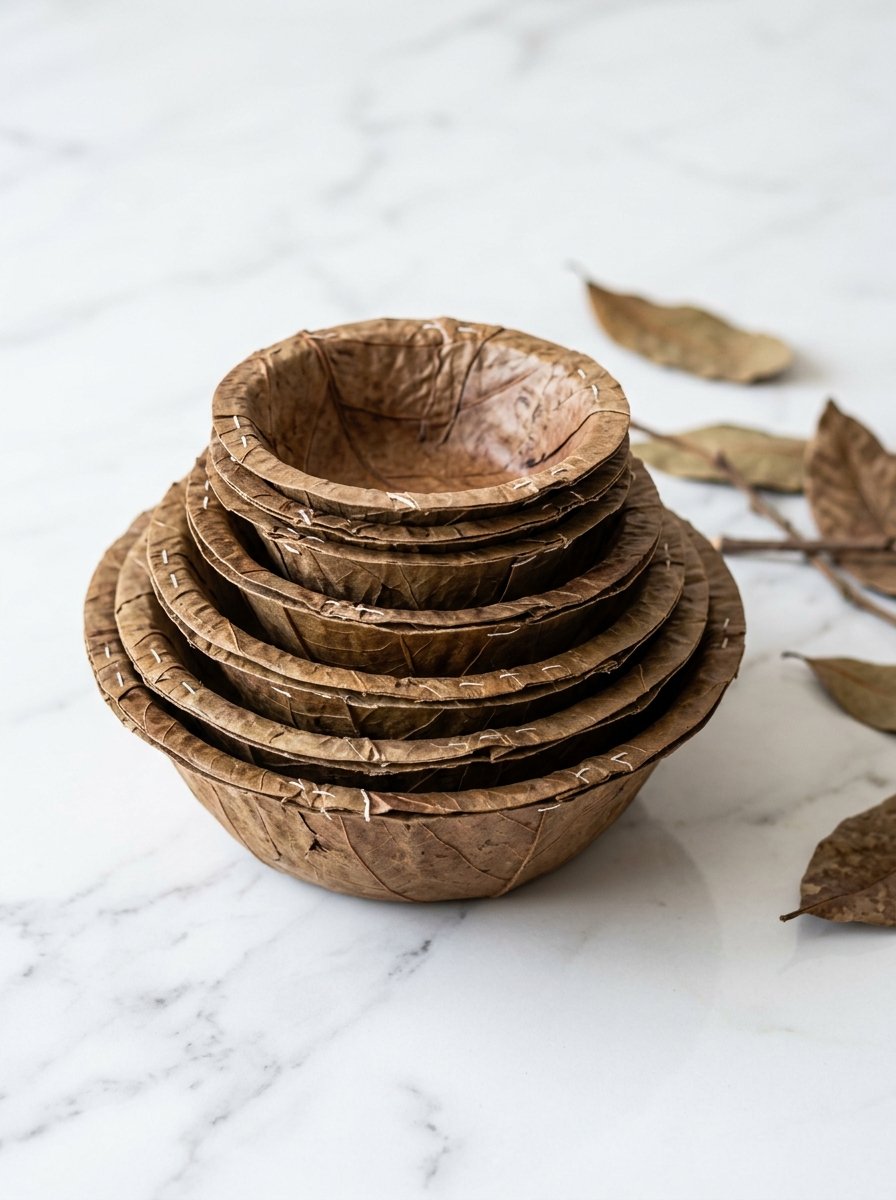
Sal Leaf Bowls (Dona)
Handcrafted sal leaf bowls — perfect for soups, curries, chutneys and street-food stalls across India.
- 🌿 Fully compostable in 45-60 days
- 🍲 Holds liquids for 60+ minutes
- 🤝 Fair-trade made by rural artisans
- 📦 Sizes: 50ml, 100ml, 200ml, 400ml
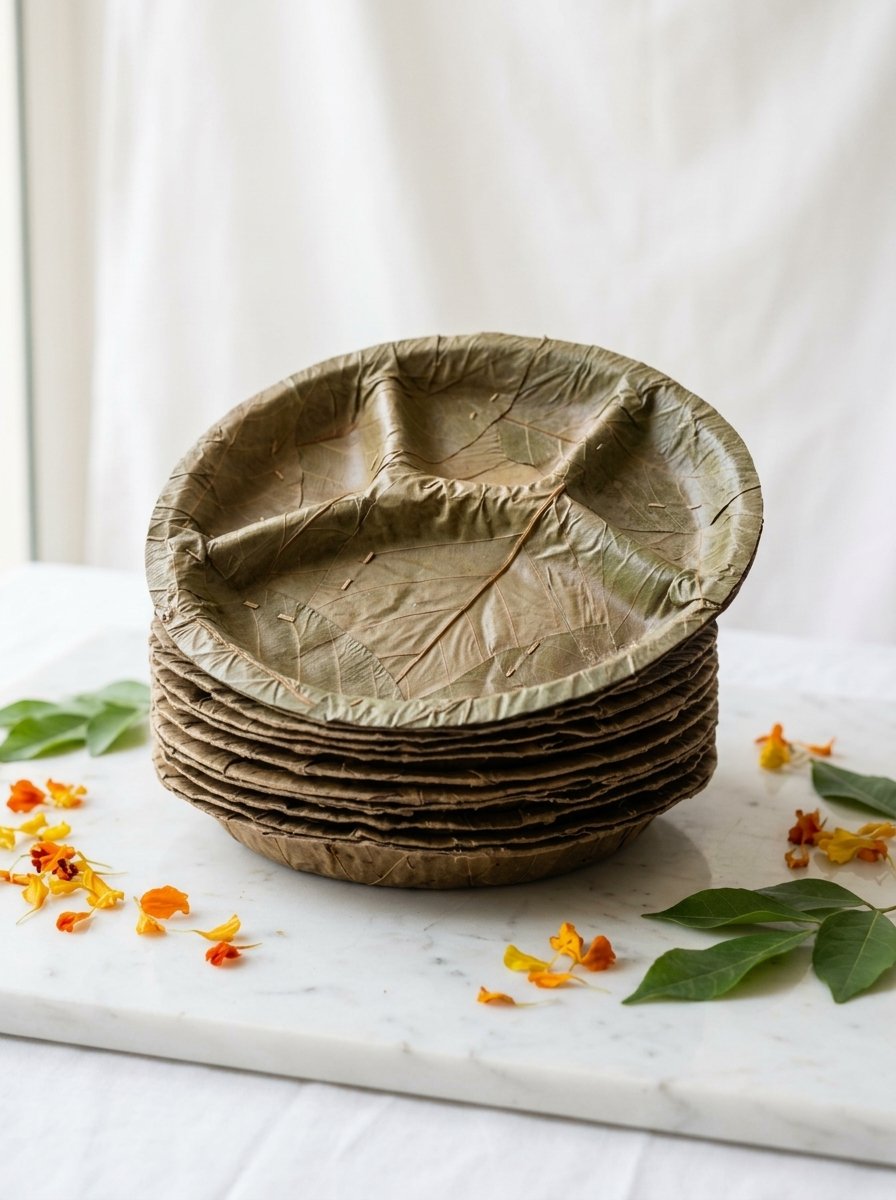
Sal Leaf Compartment Trays
Hand-stitched multi-compartment sal leaf buffet trays. Perfect for thalis, catering, weddings, and full meals with multiple sides.
- 🌿 100% Natural multi-compartment design
- 🍲 Holds gravies, rice, and sides separately
- ✨ Stitched with natural bamboo pins
- 📦 Available: 3-Compartment, 4-Compartment & Buffet Trays
Sal Leaf Plates Catalogue
Handcrafted from 100% natural sal leaves, available in standard and custom sizes for dining, catering, and grand events.
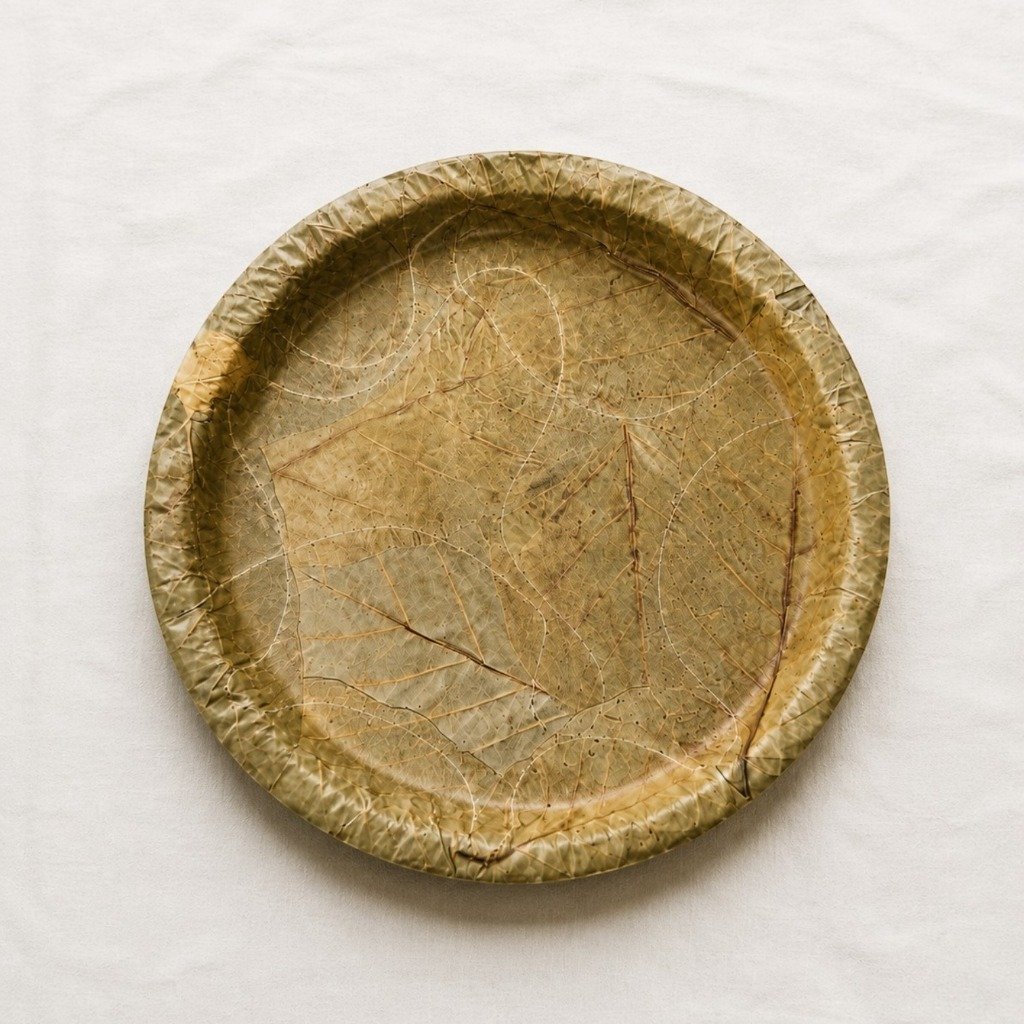
13" Sal Leaf Dinner Plate
Full-course dinner plate made from layered sal leaves with circular stitched reinforcement. Perfect for main courses, banquets, weddings, and traditional thali service.
- 🌿 100% Forest-sourced Sal Leaves
- 🍲 Holds full meal & gravies without leaking
- 🔥 Heat & microwave safe (up to 20 min)
- 📦 Size: 13" Diameter (Standard Large)
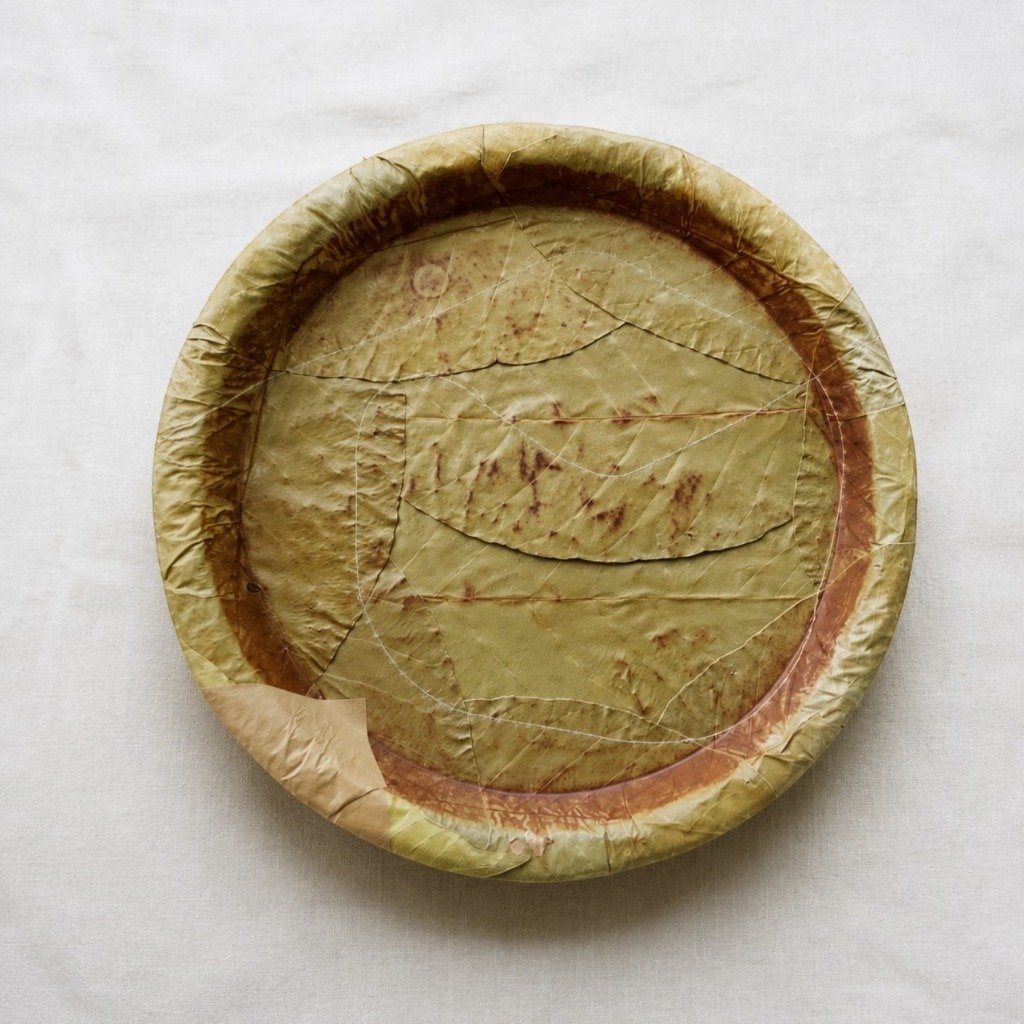
14" Grand Buffet Plate
Extra-large buffet plate with a deep raised rim and sturdy stitched border. Built for grand feast spreads, catering buffets, and temple prasad.
- 🌿 Deep raised rim for zero spillage
- 🛡 Heavy-duty strength for heavy buffet meals
- 💧 Naturally leak and grease resistant
- 📦 Size: 14" Diameter (Extra Large Buffet)
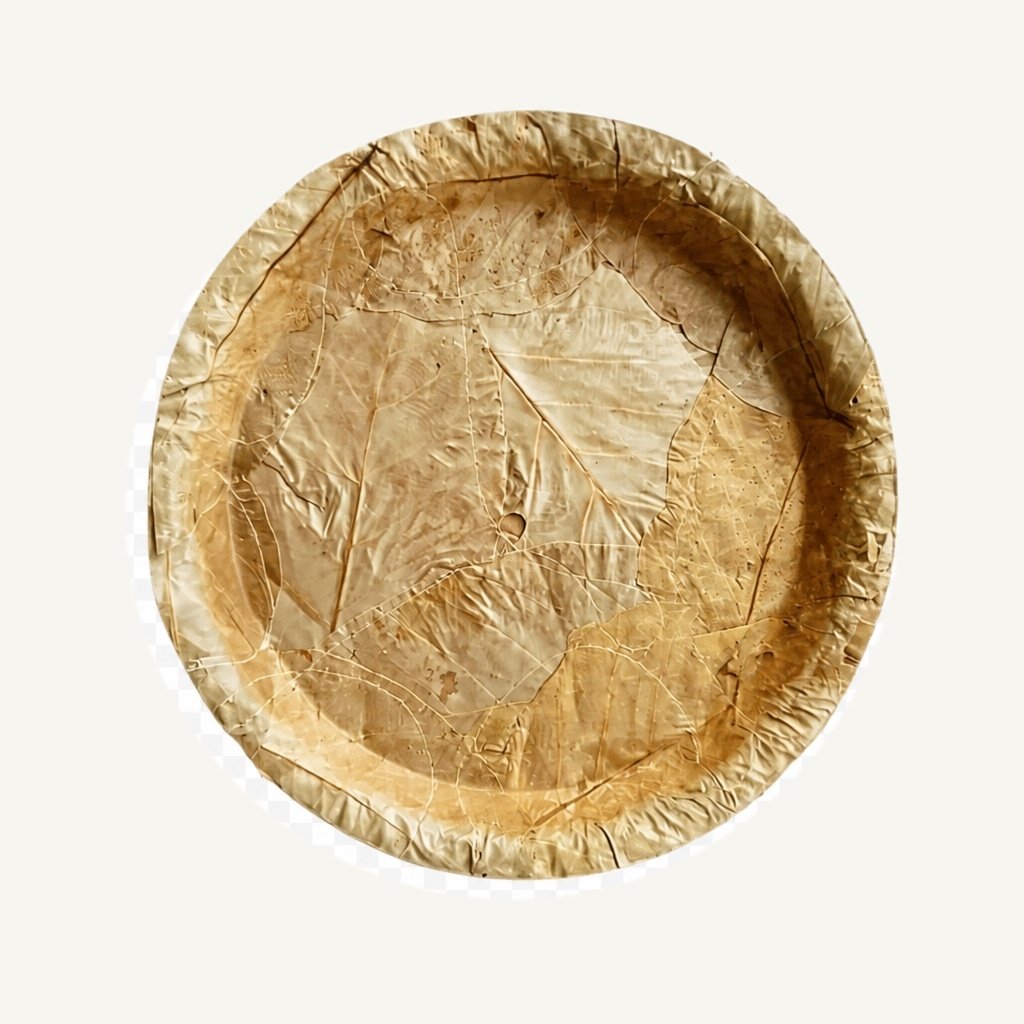
12" Classic Dinner Plate
The timeless Indian pattal plate crafted from sun-dried golden sal leaves. Ideal for lunch gatherings, corporate catering, and everyday meals.
- 🌿 Traditional artisan-stitched golden leaves
- ♻ 100% Biodegradable in 45-60 days
- 🍲 Ideal for lunch, dinner & festive meals
- 📦 Size: 12" Diameter (Standard Dinner)
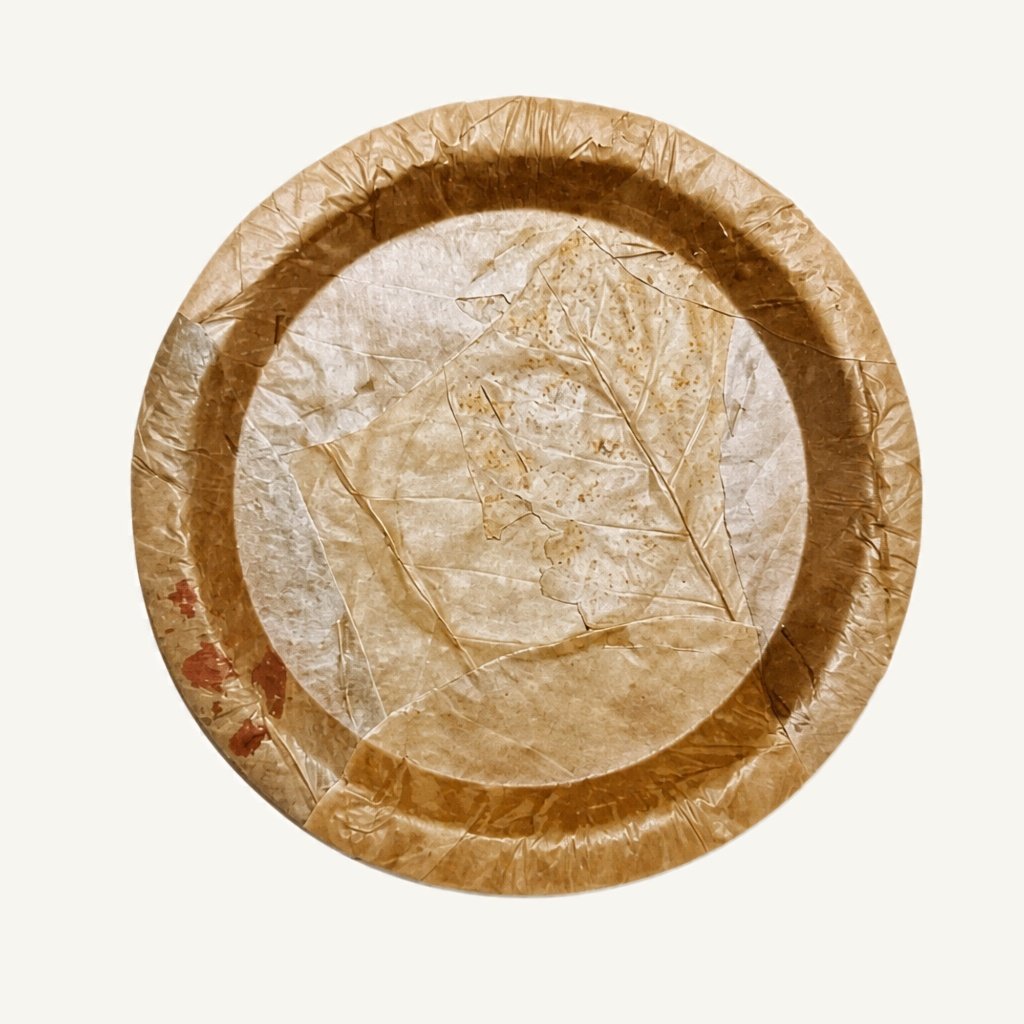
8" Snack & Dessert Plate
Compact round leaf plate with a smooth rim. Ideal for snacks, breakfast items, chaat, sweets, appetizers, and dessert servings.
- 🌿 Compact single-portion leaf plate
- 🍰 Perfect for chaat, sweets & appetizers
- ✨ Zero chemical coatings or plastic film
- 📦 Size: 8" Diameter (Snack / Dessert)
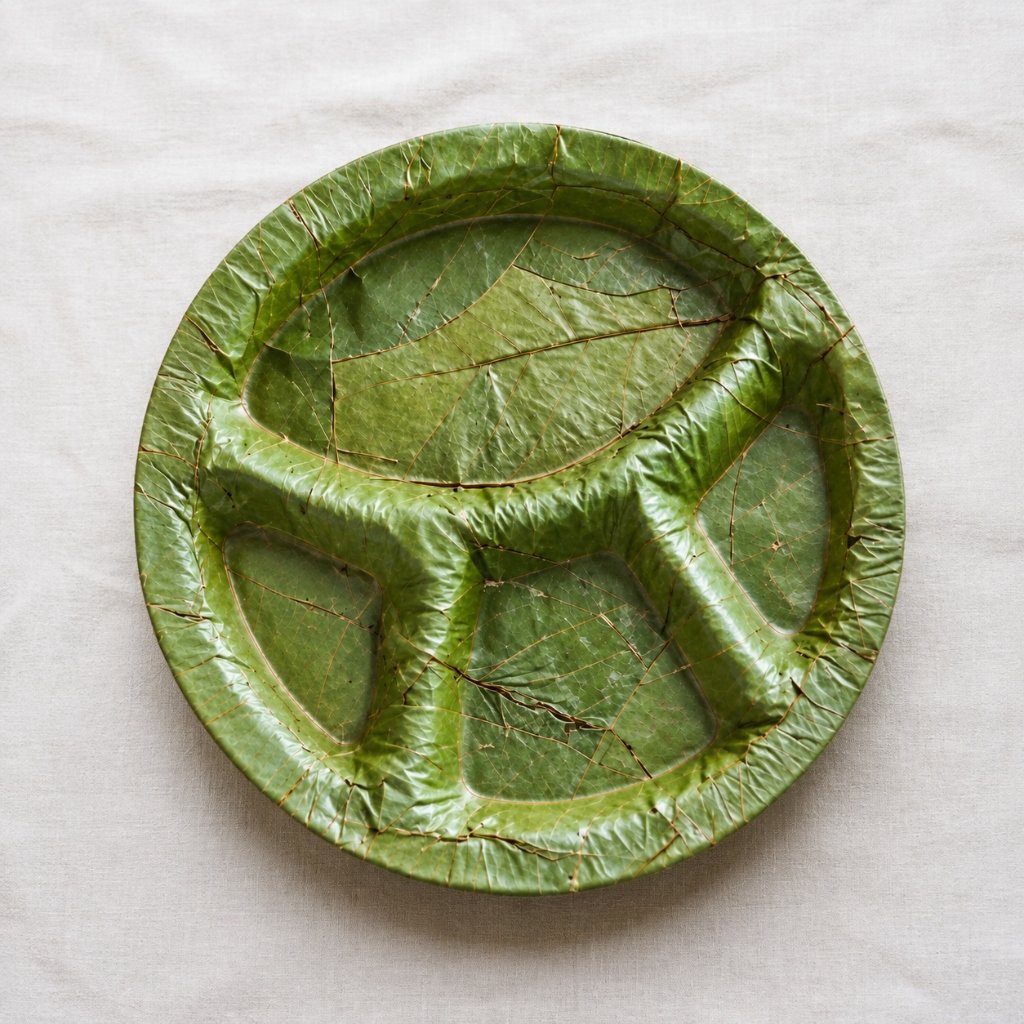
12" Sal Leaf Compartment Tray
Handcrafted 4-compartment sal leaf buffet tray with deep partitioned sections. Ideal for thali meals, catering buffets, weddings, and combo platters.
- 🌿 4-Compartment partitioned design
- 🍲 Holds rice, roti, dal & 2 sides separately
- 🛡 Stitched with natural bamboo pins
- 📦 Size: 12" Diameter (4-Compartment Tray)
Sal Leaf Bowls & Donas
Traditional leak-resistant leaf bowls in multiple sizes — crafted for gravies, dal, curries, golgappa, street food, and meals.
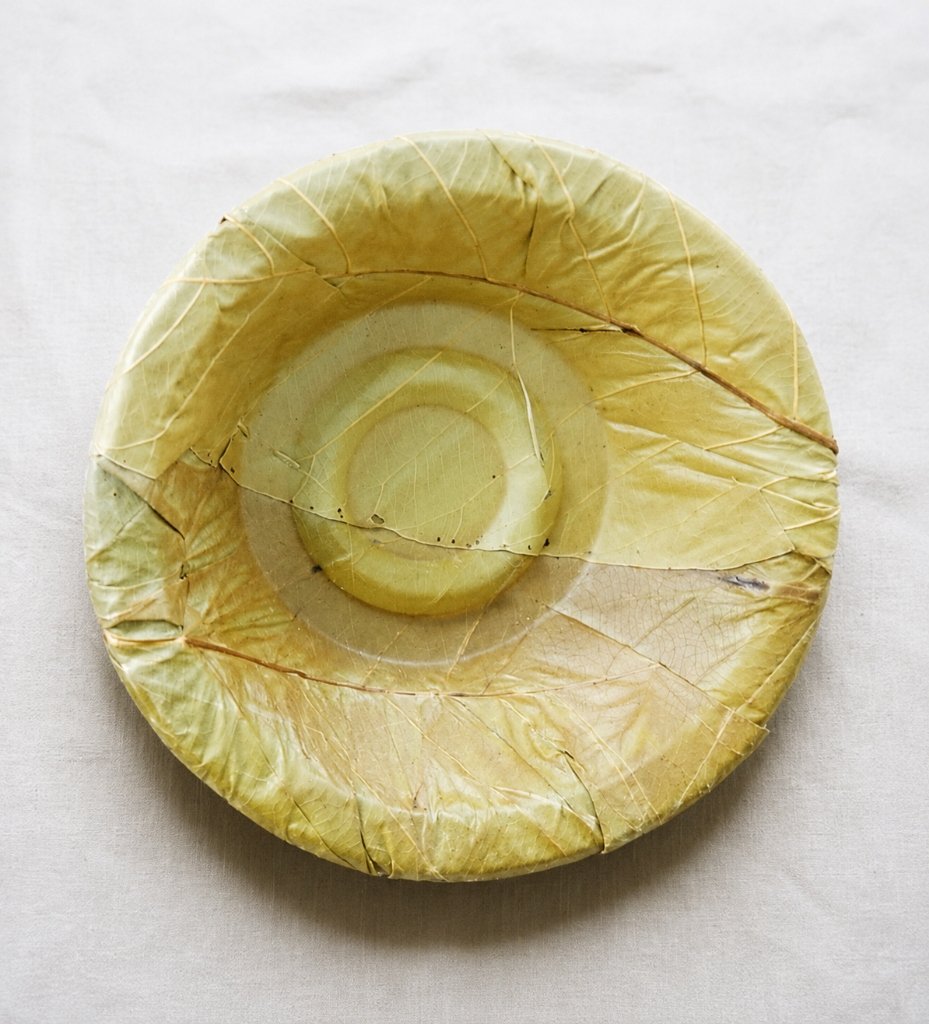
4.5" Sal Leaf Bowl (Dona)
Handcrafted natural sal leaf dona with reinforced base. Perfect for serving dal, sambar, gravies, chaat, halwa, and sweets.
- 🌿 Deep pressed bowl with reinforced base
- 🍲 Holds hot gravies, dal & sambar (60+ min)
- 🔥 Heat & microwave safe (up to 20 min)
- 📦 Size: 4.5" Diameter (Standard Medium)
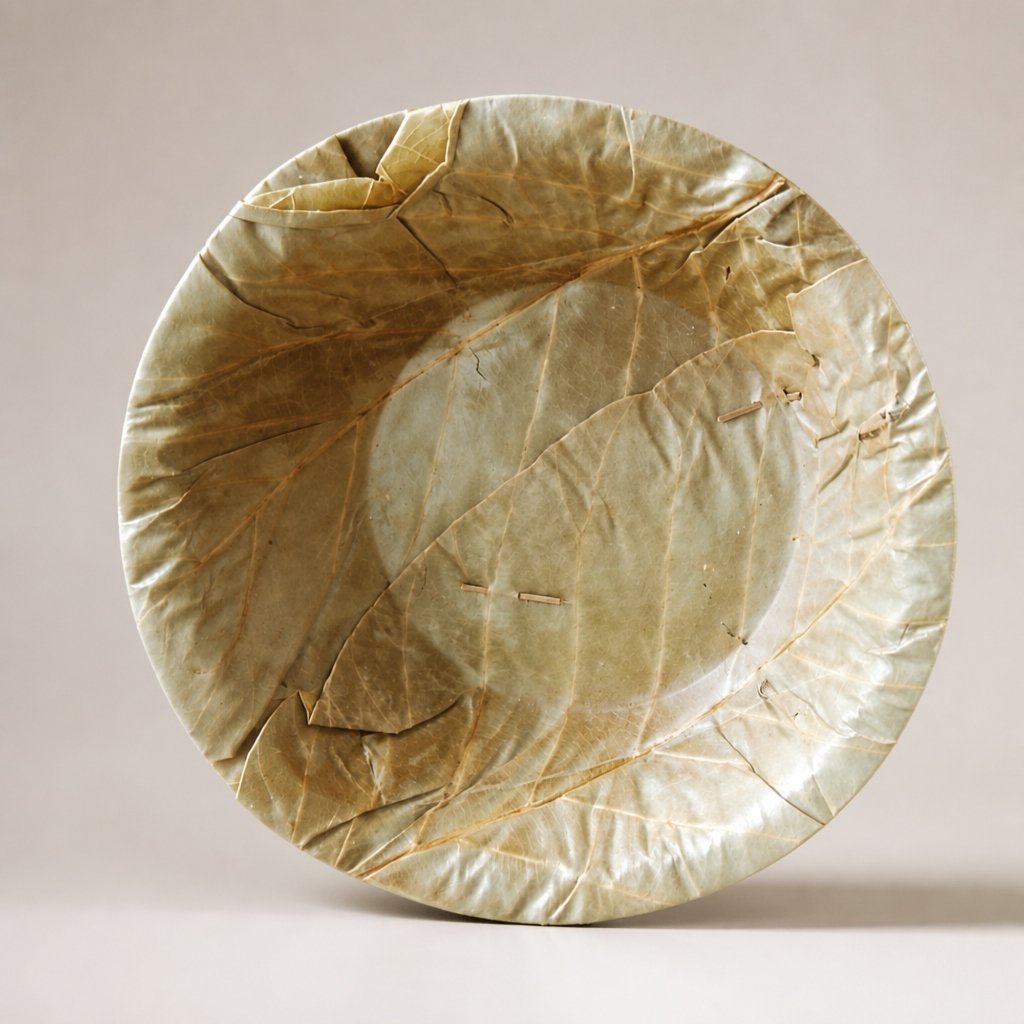
6" Large Meal & Biryani Bowl
Extra-capacity handcrafted sal leaf bowl. Built for single-bowl meals, biryani, pulao, noodles, large curries, and catering feasts.
- 🌿 Extra deep large capacity serving bowl
- 🛡 Heavy-duty strength stitched with bamboo pins
- 🍲 Perfect for biryani, meals & catering buffets
- 📦 Size: 6" Diameter (Large Meal Bowl)
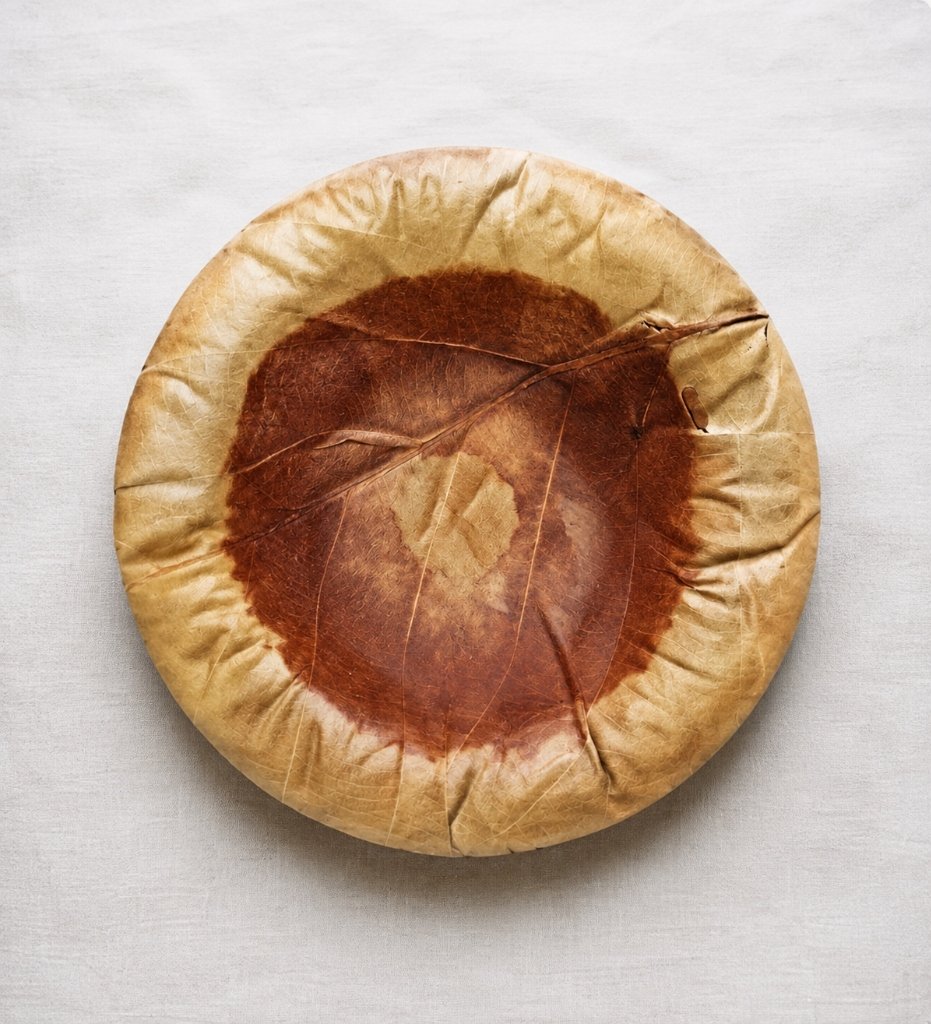
2" Golgappa & Pani Puri Dona
Traditional single-portion bite-sized leaf dona. Ideal for golgappa, pani puri, puchka, single-serve chutneys, and sacred prasad.
- 🌿 100% Biodegradable & Plastic-Free
- 💧 Leak-resistant for flavoured pani & liquids
- 🍲 The authentic Indian street-food experience
- 📦 Size: 2" Diameter (Golgappa / Pani Puri)
Built on Principles,
Not Plastic
100% Natural Materials
Made from naturally shed sal leaves — no chemical binders, no synthetic coatings, just pure nature.
Artisan-Empowering
Over 1,200 rural women artisans earn fair wages handcrafting each product — keeping ancient traditions alive with modern dignity.
Fully Compostable
Every product returns to the earth in 45-60 days. Zero microplastics, zero landfill — nature's complete lifecycle at work.
Bulk & B2B Ready
From 500-piece trial orders to million-unit export contracts — we scale with your business needs and delivery timelines.
Custom Branding
Add your brand's logo or design to our products. Perfect for restaurants, hotels, events, and corporate dining.
Proudly Made in India
Sourced from Indian forests, made by Indian hands, shipped across India and internationally — rooted in our culture.
From Forest Floor
to Your Table
A transparent, zero-waste journey that honours the earth at every step.
Leaf Collection
Naturally fallen sal leaves are hand-collected from sustainable native forests — no tree is cut.
Cleaning & Drying
Leaves are sun-dried and cleaned naturally. No chemicals, no bleaching — just pure air and sunlight to prepare each leaf.
Hand Stitching
Skilled women artisans hand-stitch multiple leaves using thin bamboo pins to create the final plate or bowl shape — no glue, ever.
Quality Check & Pack
Each piece is inspected for uniformity, strength, and hygiene before being hygienically packed and dispatched.
Trusted by Businesses
Across India
The Toxic Reality of Plastic & Thermocol Tableware
Single-use styrofoam and thin plastic tableware don't just destroy our planet for 500+ years — they leach hazardous microplastics, toxic chemicals, and carcinogens directly into hot food.
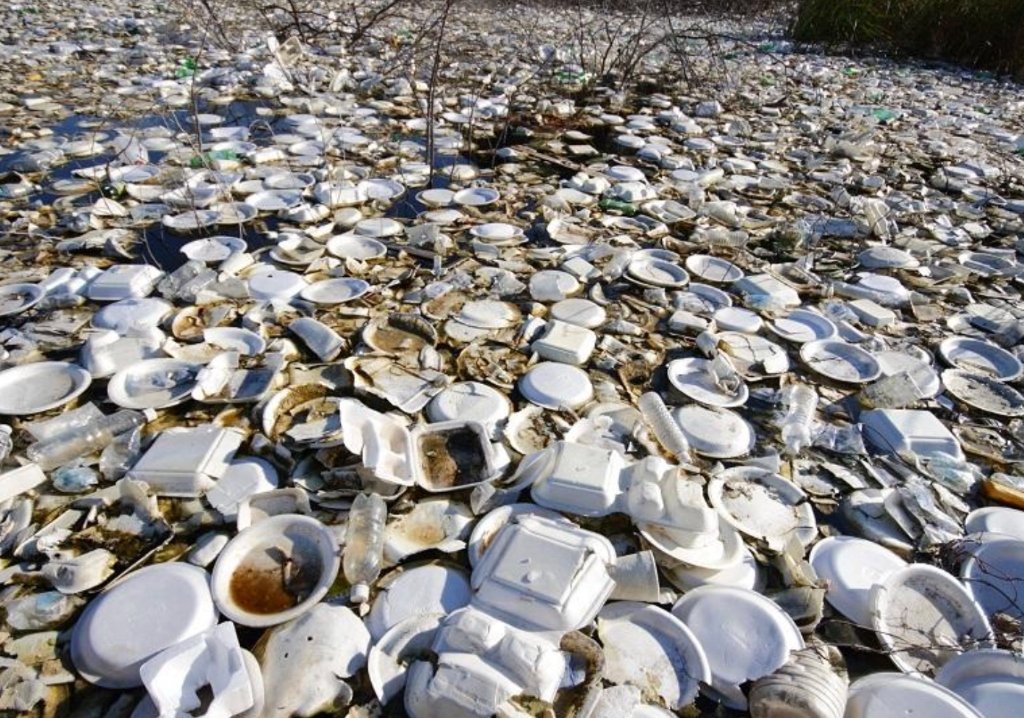 500+ Years in Landfill
Choking Water Bodies & Ecosystems
Over 80% of single-use thermocol plates end up in lakes, rivers, and drainage channels — suffocating aquatic life, causing toxic water contamination, and never decomposing naturally.
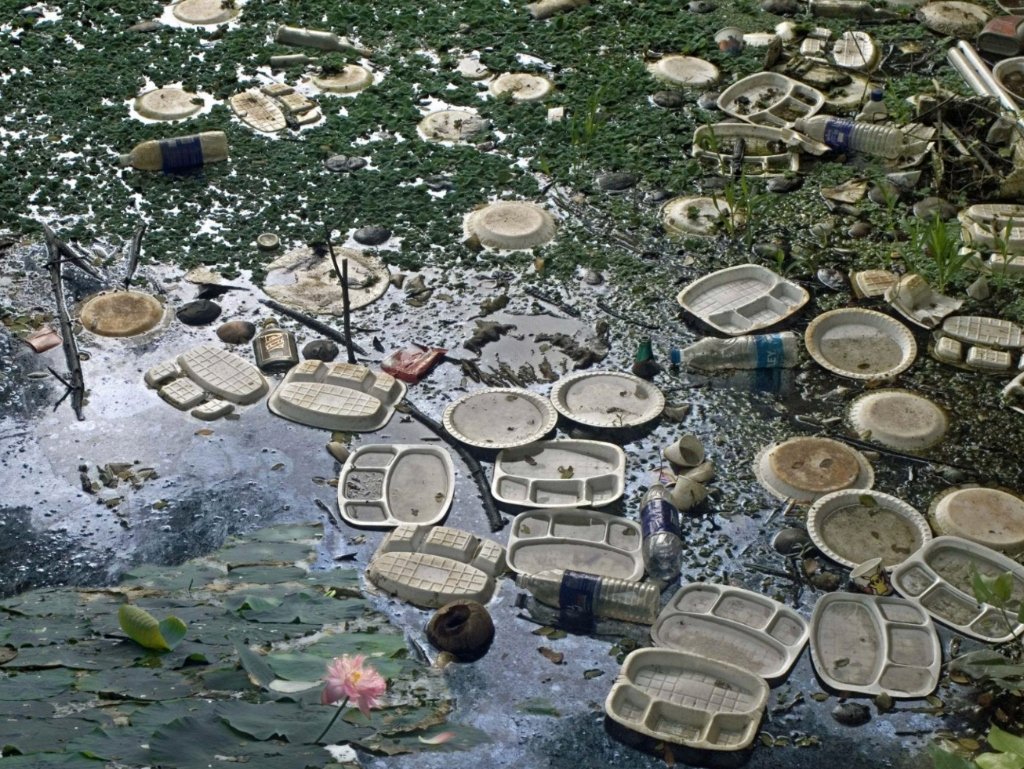 Deadly Microplastics
Microplastics in the Food Chain
Discarded plastic and thermocol trays break down into billions of microscopic particles that poison groundwater, soil, and aquatic ecosystems, ultimately entering human food and drinking water.
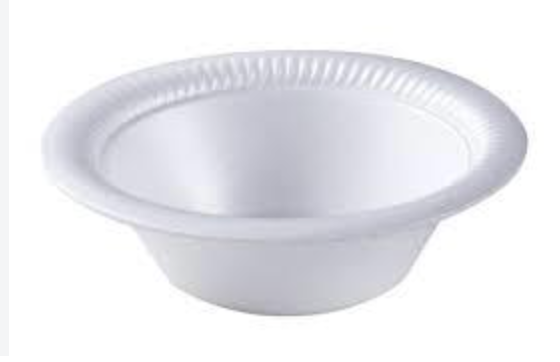 Not Safe for Hot Food
Dangerous Chemical Migration
Thermocol bowls melt and release toxic styrene monomers into hot soups, dal, sambar, and curries within seconds of contact — poisoning the very food you serve.
Carcinogenic & Cancer Risks
Thermocol is made of Polystyrene containing Styrene, classified as a probable human carcinogen by the WHO and the International Agency for Research on Cancer (IARC). Prolonged exposure is linked to leukaemia and endocrine disruption.
Strictly Unsafe for Hot Food
Thermocol softens and degrades at temperatures as low as 70°C to 80°C. Serving hot biryani, boiling curries, oil, or tea accelerates the chemical migration of toxic monomers directly into your meal.
Microplastics in Human Organs
Every scrape of a spoon or fork on disposable plastic tableware sheds invisible synthetic microplastic fibres. Medical research has detected these particles in human blood, lungs, liver, and vital organs.
500+ Years Environmental Poison
A plastic or thermocol plate is used for only 15 minutes, but takes over 500 years to break down, leaching toxic heavy metals and benzene into landfills and agricultural soil forever.
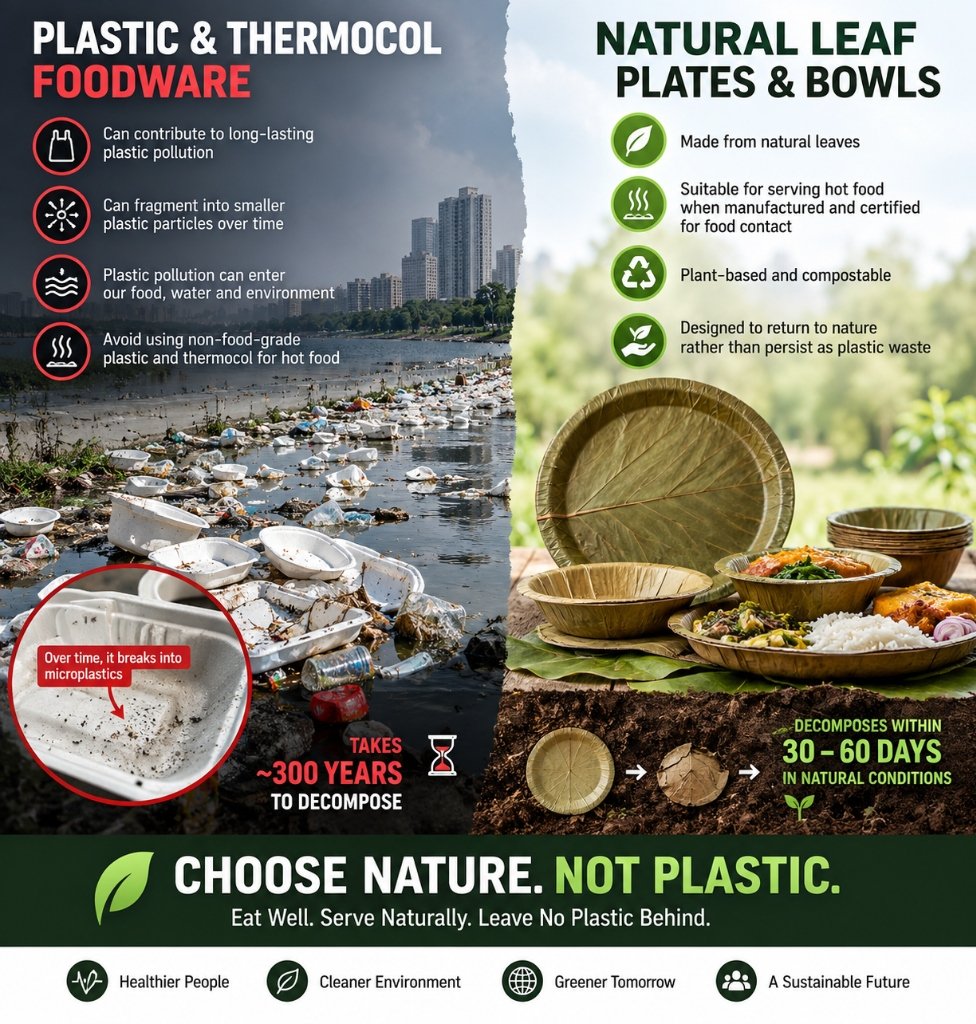
Plastic & Thermocol vs. Natural Sal Leaf Tableware
See why eco-conscious restaurants, caterers, and homes are choosing 100% biodegradable natural leaf tableware over toxic single-use plastics.
Questions? We Have Answers.
Yes! Sal leaf plates can be used in a microwave for up to 20 minutes safely. They contain no plastic, metal, or synthetic material.
Our sal leaf plates and bowls hold liquid foods like dal, curry, or sambar for 60-90 minutes without leaking or softening — perfect for catering events.
Minimum order is 500 pieces per SKU. For wholesale B2B orders, pricing tiers start from 5,000 pieces. Trial sample kits of 25-50 pieces are available on request.
Sal leaf products decompose in 45-60 days in a compost environment. In soil, they break down in 2-3 months, producing zero microplastics.
Yes! We offer custom eco-printing on packaging with your brand logo or message. For large orders, co-branding options are also available. Contact us for details.
Yes! We ship to all 28 states across India in 5-7 business days. International shipping to USA, UK, UAE, Singapore, and Australia is available.
Ready to Go Green?
Let's Talk Business.
Whether you're a restaurant, event planner, NGO, or large retailer — we have a solution for every scale. Reach out and we'll respond within 24 hours.